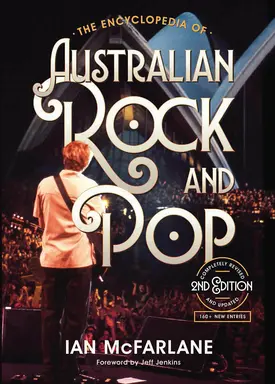
The encyclopedia of Australian rock and pop embeds a brief history of pop and rock musical developments Down Under with a wealth of information on personalities, bands, and institutions. This second edition has been completely revised and updated, adding over 160 new articles to the previous 870 entries. With articles on AC/DC, The Avalanches, Olivia Newton-John, and Guy Sebastian, as well as You Am I and Zoot, it is the most comprehensive guide to artists who molded Australian popular music from 1956 to 2016. Each article contains biographical information, line-up details, record releases, career highlights, and album discographies, as well as an authoritative critique on each artist’s career. Major entries have references for further reading. This comprehensive approach makes transparent the impact of singers and bands such as Johnny O'Keefe, Marcie Jones, and The Delltones; Sherbet and Daddy Cool, and Human Nature; and personalities such as Darryl Cotton, Johnny Young, Tina Arena, and Kylie Minogue. There is extensive coverage of those who have had long-standing local careers, such as John Farnham, Jimmy Barnes, and Col Joye; those who have enjoyed significant international careers, such as Rick Springfield, Helen Reddy, and The Bee Gees; as well as recognition of lesser-known live bands, such as the eccentrically named The Band Who Shot Liberty Valance, and bands who may not have recorded but still made a contribution to Australian popular music history. The attention to detail reveals itself in facts such as former Australian Prime Minister Paul Keating managing a 1960s rock band. This is an essential work of reference for anyone seeking information on Australian popular music and its impact abroad. A bibliography is included at the end of the encyclopedia.
A comprehensive reference work dedicated to the French mélodie, with a particular focus on the art songs of Gabriel Fauré, Claude Debussy, Maurice Ravel, and Francis Poulenc. The volume features entries on individual songs, accompanied by discussions of relevant poems, poets, historical and cultural contexts, and specialized terminology. Designed to support singers, pianists, educators, and scholars, the encyclopedia offers interpretive commentary on performance practice, programming considerations, and the intricate interplay between music and text. Extensive cross-referencing facilitates the exploration of thematic and contextual connections across the repertoire. Reflecting the author’s expertise as a pianist, teacher, and musicologist, the work serves as both a pedagogical tool and a resource for research and performance preparation. It makes a significant contribution to the study and appreciation of French art song.
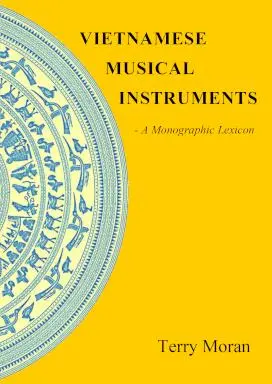
Vietnamese musical instruments is one of the most comprehensive lexicons on this topic. Compiled by Terry Moran, an Australian teacher resident in Singapore, over the course of a 20-year research journey in Vietnam, the lexicon offers 241 individual entries, each accompanied by a hand-drawn illustration by Luke Agati. The lexicon includes aerophones (Họ Hơi), such as the Kèn đá, a 2000-year-old stone bugle discovered in 1994; chordophones (Họ Dây) from the different ethnic minorities across Vietnam; idiophones (Họ Tự Thân Vang), among them the world’s sixth oldest playable instrument, a lithophone; and membranophones (Họ Màng Rung), with an impressive 43 pages dedicated to this family of instruments from both the Việt majority and the ethnic minorities. There is also a section on instruments created in 2007 by members of the Khắc Chí Tre Xanh ensemble. Aside from details about instruments, the lexicon offers a brief history of Vietnamese music and some specifics about instrument classifications. Addresses of noteworthy stores and galleries of Vietnamese musical instruments are also indexed.
