
Publications
2 publications of 2, page 1
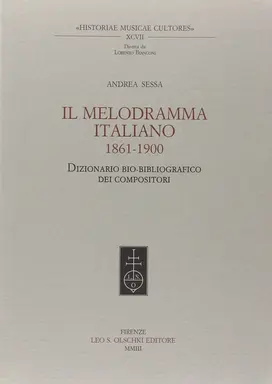
Il melodramma italiano: Dizionario bio-bibliografico dei compositori
Il melodramma italiano is an unequalled source of detailed information about the figures who defined the golden age of Italian opera. It was conceived with the intention of satisfying scholars and enthusiasts interested in little-known aspects of a period of transition in theater history—from the unification of Italy to the advent of fascism. In addition to familiar composers such as Verdi and Puccini, lesser-known figures, whose careers were intertwined with those of their more famous colleagues but whose memory survives (at best) at the local level, are included; among them are not only musicians—conductors, bandleaders and kapellmeister, organists, and music teachers—but lawyers, judges, doctors, and engineers who had a passion for the stage. Entries on Italian and foreign composers working in the chosen time period and active in the Mediterranean theater circuit (particularly in Nice, Malta, Corfu, Dalmatia) represent the most important body of material in these volumes. Each quoted work contains a description of literary sources and the plot. The two volumes count altogether 1323 biographical entries from Gennaro Abbate (1874–1954) to Guglielmo Zuelli (1859–1941). They are enriched with a comprehensive bibliography. The first volume ends with an appendix that lists repertoire and other relevant information published in the Gazzetta musicale and Trovatore between 1861 and 1900. In this way the two volumes constitute a complete and comprehensive guide to 60 years of Italian opera, specifically highlighting those who made larger and small contributions to it.
Browse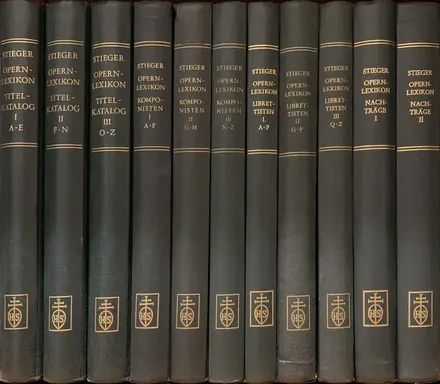
Opernlexikon/Opera catalogue/Lexique des opéras/Dizionario operistico
Franz Stieger’s Opernlexikon is one of the most frequently consulted of all opera catalogues. It also contains ballets, oratorios, and other stage works, all listed by title, composer, and librettist. Lists of serious operas, cross-indexing of titles, and identification of librettists are especially noteworthy. The concluding two volumes, titled Nachträge, contain corrections as well as additions. With over 60,000 titles of stage works, the Opernlexikon exceeds every other published opera catalogue in size. It provides the place and date of every work's premiere (when known), along with an identification of its genre and number of acts. The Opernlexikon is especially valuable for works written and performed before 1920. A short introduction by Franz Grasberger, librarian of the music division of the Österreichische Nationalbibliothek, highlights the catalogue’s value in light of previously unpublished information. Grasberger also provides biographical information, not available elsewhere, on Stieger (1843–1938).
Browse