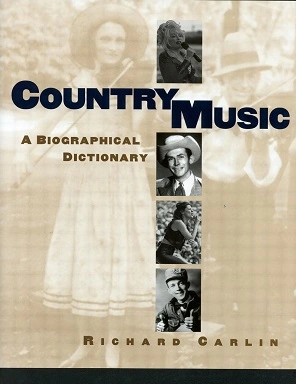
Country music features over 700 biographical entries of musicians, comedians, producers, singer/songwriters, and groups. Among them are current performers such as Billy Ray Cyrus and Faith Hill, and those that made history or are historical such as Carolina Tar Heels. Most of the biographical entries include a select discography. Despite its subtitle, the dictionary also offers about 40 subject entries, on song categories such as weepers (songs dripping with heavy sentiment), instruments such as the pedal steel guitar and the banjo, locales such as the Grand Ole Opry, subjects such as the radio, and subgenres such as countrypolitan. A few entries on musical styles are included, among them bluegrass, gospel, honky-tonk, and rockabilly. Indeed, Country music highlights the inclusiveness of country music’s connections to folk, rock, Tejano, and other roots genres. Broader aspects of the country music landscape such as record labels, social commentary, and politics are addressed as well, deepening the encompassing approach. The volume contains more than 70 photos which accompany select entries. Cross-referencing allows readers to unravel threads of related entries. Two appendices organize performers and other notables according to subgenres they are associated with and by the instruments that they play. The select bibliography, listing some 150 publications, provides solid coverage of popular and scholarly secondary sources on country music. A comprehensive name index includes song and album titles.
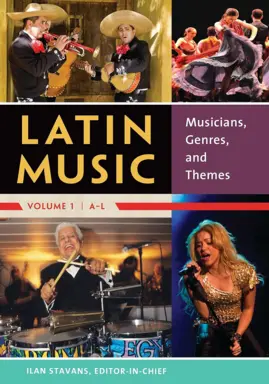
Latin music: Musicians, genres, and themes provides an in-depth exploration of the rich and diverse world of Latin music, examining its history, cultural significance, and the wide range of genres it encompasses. The encyclopedia covers the evolution of Latin music from its roots in Indigenous, African, and European traditions to its contemporary global influence. It offers detailed profiles of influential musicians, including iconic figures such as Tito Puente, Celia Cruz, and Carlos Santana, shedding light on their contributions to the development of Latin music and their lasting legacies. The two volumes delve into key genres like salsa, merengue, bachata, tango, and reggaetón, discussing their origins, stylistic characteristics, and cultural impact across different Latin American countries and communities. In addition to genre exploration, Latin music touches on broader themes such as identity, migration, and the ways in which Latin music has become a vehicle for social and political expression. The 244 entries also include socio-political factors that have shaped Latin music’s growth and dissemination. This is a key resource for music researchers looking to understand the musical traditions, key figures, and cultural contexts that have defined Latin music and its enduring global appeal.