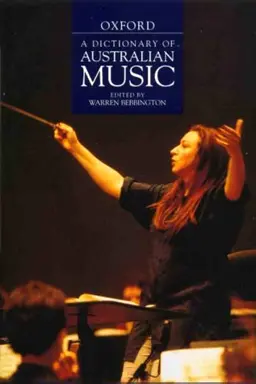
This is the first comprehensive reference work on Australian music. With just over 1400 entries written by 125 authorities on the subject, the dictionary covers a wide spectrum of topics, from ancient Aboriginal traditions and European-derived orchestral, operatic, and concert music, to Australian folk, jazz, country, popular, rock, electronic, and experimental music. There are entries on major historical and contemporary figures, including those who have achieved worldwide fame, such as Peter Allen, Percy Grainger, Peggy Glanville-Hicks, Kylie Minogue, Barry Tuckwell, Charles Mackerras, and the three great divas: Nellie Melba, Joan Hammond, and Joan Sutherland. Leading orchestras and ensembles are represented, as well as major pop and rock groups, among them the Seekers, the Bee Gees, AC/DC, and Midnight Oil. In addition to entries on individual composers, performers, and musical works and instruments, the dictionary covers leading musicologists, critics, broadcasters, educators, and researchers. The dictionary thus considers and reflects the diversity of music on the Australian continent.
This biographical dictionary chronicles all the master craftsmen involved in instrument making in New York City, from the obscure work of Geoffry Stafford in 1691 to the zenith of the 1890s, and on to the Great Depression of the 1930s. Many of the 1095 detailed entries focus on nineteenth-century makers, when the city was the largest producer of instruments in the Western Hemisphere, and designs and innovations pioneered by New York artisans influenced and inspired instrument makers throughout the world. Aside from providing a record of these instrument makers, the dictionary offers a historical study of an urban trade that is ultimately tied to the growth and development of the city.
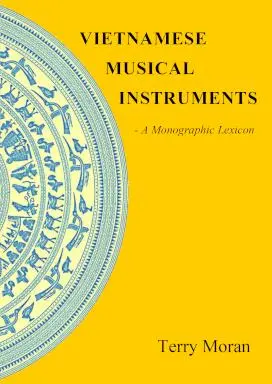
Vietnamese musical instruments is one of the most comprehensive lexicons on this topic. Compiled by Terry Moran, an Australian teacher resident in Singapore, over the course of a 20-year research journey in Vietnam, the lexicon offers 241 individual entries, each accompanied by a hand-drawn illustration by Luke Agati. The lexicon includes aerophones (Họ Hơi), such as the Kèn đá, a 2000-year-old stone bugle discovered in 1994; chordophones (Họ Dây) from the different ethnic minorities across Vietnam; idiophones (Họ Tự Thân Vang), among them the world’s sixth oldest playable instrument, a lithophone; and membranophones (Họ Màng Rung), with an impressive 43 pages dedicated to this family of instruments from both the Việt majority and the ethnic minorities. There is also a section on instruments created in 2007 by members of the Khắc Chí Tre Xanh ensemble. Aside from details about instruments, the lexicon offers a brief history of Vietnamese music and some specifics about instrument classifications. Addresses of noteworthy stores and galleries of Vietnamese musical instruments are also indexed.
