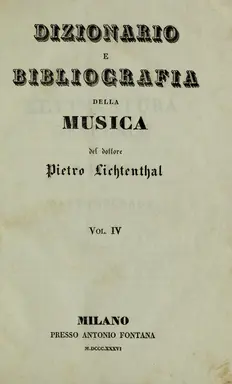
Born in Preßburg (today Bratislava), Peter Lichtenthal (1780–1853) studied medicine at the University of Vienna and in 1810 moved to Milan, where he acted as a censor of the Kingdom of Lombardy-Venetia. A composer and music theorist by passion (and an early writer on music therapy), he published his seminal first edition of the Dizionario in 1826 (with a reprint in 1836). According to Fétis, who met Lichtenthal in 1841, the Dizionario was the result of 12 years of hard work. Its four volumes are divided into two parts, the first being a music dictionary, the second a general bibliography based on Johann Nikolaus Forkel’s Allgemeine Litteratur der Musik, translated with additions. Lichtenthal’s mission was to create an all-inclusive music encyclopedia, considering the theoretical and practical, the ancient and modern, the anthropological and historical, the aesthetic and philosophical, and not excluding the sciences, particularly physics and mathematics. Although full of factual errors, and being largely a translation of the dictionaries of Gerber (1790–92), Koch (1802), and Castil-Blaze (1821), and the bibliography of Forkel (1792), it is nevertheless a landmark in the development from dilettantism to modern, systematic bibliographic method and contains valuable genre definitions.
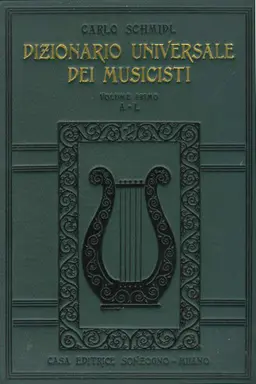
The Dizionario universale dei musicisti by the publisher and music historian Carlo Schmidl (1859–1943) is widely recognized as an important early biographical dictionary for Italian musicians. The second edition, published nearly a half-century after the first, constitutes a significant expansion, it contains two volumes rather than the original one and has a supplement. Articles on composers include lists of their works and details of first performances. The Dizionario is especially notable for its articles on Italian literary figures and their relationship to music, a feature uncommon among biographical music dictionaries.
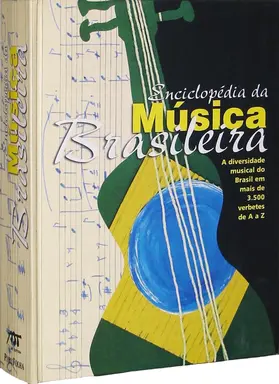
Enciclopédia da música brasileira: Erudita, folclórica, popular
This revised and expanded edition of Marcondes’s ultimate reference work on music in Brazil covers all musical manifestations from ca. 1500 until the present day. It contains biographies of composers, musicians, and performers of classical music, from Villa-Lobos and Bidu Saião to contemporary artists such as Almeida Prado and Nelson Freire; definitions of national rhythms and dances; and entries on performing organizations, each with additional references to facilitate further research. The Enciclopédia da música brasileira also features great interpreters and composers of Brazilian popular music, from Ari Barroso and Noel Rosa to João Gilberto and Chico Buarque, including names of the newer generation such as Marisa Monte. With more than 35,000 entries, the Enciclopédia da música brasileira is an essential reference work for those interested in the classical, popular, and folk musics of Brazil.
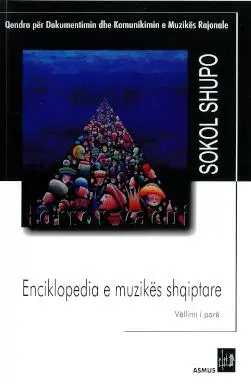
With the Enciklopedia e muzikës shqiptare, Sokol Shupo, an Albanian music researcher and composer who serves on the faculty at the Academy of Arts in Tirana, pays tribute to the many important figures in Albanian music history who are not recognized in other encyclopedias. The encyclopedia offers 186 entries on performers, composers, musicologists, and others active in Albania’s music scenes, from Petrika Afezzoli, conductor and a faculty member at the Academy of Arts in Tirana, to the composer Nikolla Zoraqi, who had made an important contribution to the development of new Albanian music. Many of the musicians who received an entry are still active in Albania today. Those who have moved abroad are only included to a limited extent. Given the condition of archives and collections in Albania and the absence of a national music bibliography, this encyclopedia provides the most complete and verified information on the history of Albanian music. It is the first single comprehensive volume of its kind.
País: Albania
Idioma: albanés
Tema: intérpretes, compositores, música tradicional
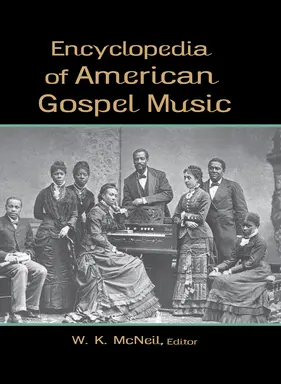
With more than 60 contributors from universities and libraries as well as from gospel and folk-music organizations, the Encyclopedia of American gospel music provides historic and biographical information for hundreds of artists who have shaped gospel music for more than 100 years. Edited by W.K. McNeil, formerly Director of the Ozark Folk Center in Arkansas, the encyclopedia covers American gospel music in its entirety from the historical foundations in post-Colonial America to today: black and white gospel music (it is one of few comprehensive, scholarly reference works to combine the two), contemporary Christian artists, record labels, religious organizations, major song collections like The sacred harp, and musical styles. Brief bibliographies (including historical and current print titles), Internet sites, and selective discographies accompany most entries. This title is the definitive work on the subject and fills a gap in a field that has had only sporadic reference documentation.
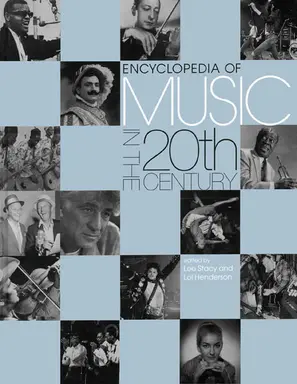
This concise, one-volume encyclopedia covers all aspects of 20th-century music from around the world, ranging from classical to popular genres, with entries devoted to composers, performers, genres and styles of music, countries, and regions. In addition to providing biographical and historical context, many articles contain suggestions for further reading and listening and cross-references to other relevant entries. The encyclopedia also features a biographical digest, with sentence-long descriptions of performers and composers, a glossary, a comprehensive bibliography, and an index. With its easy-to-read prose and user-friendly layout, this encyclopedia is particularly well-suited for entry-level students and a general audience seeking basic knowledge about 20th-century music.
Since the 1993 first edition, the Encyclopedia of recorded sound, written by Frank Hoffmann, a Library Science Professor at Sam Houston State University, has been the most thorough work available on this subject. Topics covered include technical concepts (e.g., oversampling), musical genres (e.g., rock music recordings), key figures in the development of recorded sound (e.g., Ray Dolby), recording groups and artists (e.g., Peerless Quartet), labels (e.g., Naxos), equipment manufacturers (e.g., Victor Talking Machine Co.), and even practical matters such as cleaning. The topics are largely centered on developments in the U.S., although contributions to the nation's musical life from other countries are not ignored. This second edition updates all entries and adds 60 percent new content, including information from the 1990s and early 2000s, such as the merger of AOL and Time Warner.
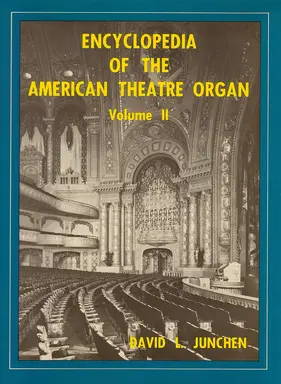
This three-volume encyclopedia provides a wealth of primary source material on the American theater organ, an instrument designed for the movie theaters of the silent film era that has now all but disappeared from American pop culture. The first two volumes contain articles about organ manufacturing companies. The third volume is devoted to “the mighty Wurlitzer”. Each entry is documented with primary source material such as photos, company records, stop lists, advertisements, drawings, and interviews and correspondence with organ makers. In addition, Junchen has provided an opus list detailing the histories of all of the organs built by each company. These materials will prove indispensable to anyone researching popular music in the silent-film era.
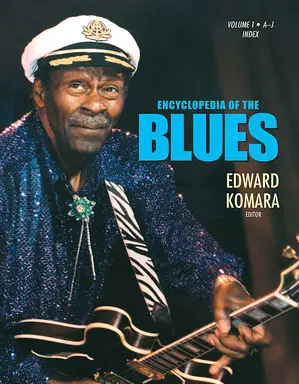
Komara, the Crane Librarian at SUNY at Potsdam, assembled more than 2,000 articles for this two-volume blues encyclopedia. The exhaustive catalogue of biographical entries features blues artists, historians, songwriters, and label owners from all time periods and includes items that might seem obscure (e.g., the Chicago-based R&B band Big Twist and the Mellow Fellows). The encyclopedia also provides entries for important record labels, instruments, musical styles, individual songs, geographic regions, historiography, aspects of the business, and additional topics that have been lacking in other encyclopedic efforts: entries such as Blues Folklore and Juke Joints. The blues often gets lumped together with jazz, folk, or gospel; it is rare to see it stand on its own as an encyclopedic subject. This title clearly fills a gap by offering multifaceted coverage in one place.
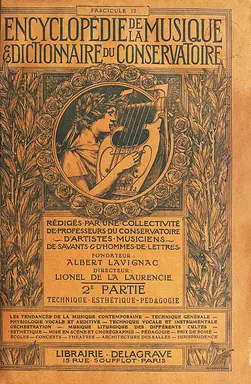
Encyclopédie de la musique et dictionnaire du Conservatoire
The French musicologist Albert Lavignac (1846–1916) conceived the Encyclopédie de la musique et dictionnaire du Conservatoire as a monumental encyclopedic undertaking with monograph-length studies by reputable French scholars. After Lavignac’s death, Lionel de La Laurencie (1861–1931) continued the project, but with his passing in 1933 the Encyclopédie was abandoned. The work as its stands consists of two parts. The first (comprising five volumes, first published between 1913 and 1922) concerns the history of music, with specific sections on periods (antiquity to Middle Ages) and on selected countries in Africa, Asia, Europe, and the Americas. The number of entries allocated to non-European music is especially noteworthy. Joanny Grosset’s major article on India may be counted the beginning of modern interest in Indian music in the French-speaking world. Similarly notable is Maurice Courant’s Essai sur la musique classique des Chinois. The second part (comprising six volumes, published between 1925 and 1931) focuses on aesthetics and theory, instruments and performance, religious music and venues. La Laurencie’s expertise in French music from Lully to Gluck led to well-balanced contributions in that subject area. The Encyclopédie is a work of universal musicology written from the French perspective after the fin-de-siècle. It has enjoyed considerable reputation among historical musicologists and ethnomusicologist alike [see Robert Lachmann’s review in Music & letters 4, no. 3 (1923): 290–291] and is indispensable for historiographic research.