
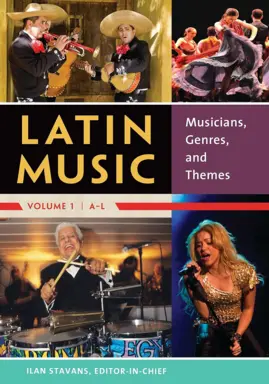
Latin music: Musicians, genres, and themes provides an in-depth exploration of the rich and diverse world of Latin music, examining its history, cultural significance, and the wide range of genres it encompasses. The encyclopedia covers the evolution of Latin music from its roots in Indigenous, African, and European traditions to its contemporary global influence. It offers detailed profiles of influential musicians, including iconic figures such as Tito Puente, Celia Cruz, and Carlos Santana, shedding light on their contributions to the development of Latin music and their lasting legacies. The two volumes delve into key genres like salsa, merengue, bachata, tango, and reggaetón, discussing their origins, stylistic characteristics, and cultural impact across different Latin American countries and communities. In addition to genre exploration, Latin music touches on broader themes such as identity, migration, and the ways in which Latin music has become a vehicle for social and political expression. The 244 entries also include socio-political factors that have shaped Latin music’s growth and dissemination. This is a key resource for music researchers looking to understand the musical traditions, key figures, and cultural contexts that have defined Latin music and its enduring global appeal.
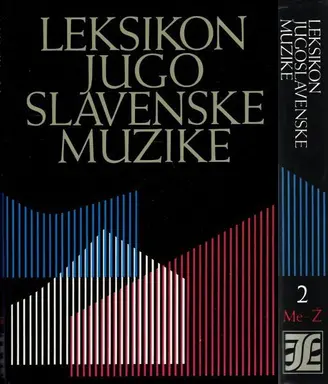
Leksikon jugoslavenske muzike is the ultimate source documenting musicians and music culture of Yugoslavia in the early 1980s. It includes 5,020 unsigned entries about composers, musicians, ballet artists, pedagogues, music theorists, historians, and ethnomusicologists and historical musicologists as well as entries on music institutions and societies, ensembles, folk music, and diverse genres and instruments from the region. Special attention is paid to the presentation of musical creativity and the musical history and life of major cities. Articles cover concepts and disciplines such as ballet, church music, criticism, musicology, awards, opera, and similar. Kovačević also introduced a specific kind of entries (short articles about individual pieces of music), to cover larger topics, and worked with cross-references. Unlike the Muzička enciklopedija, which is of a general character, the Leksikon jugoslavenske muzike contains a much expanded national structure. Many articles were copied or adapted from the Muzička enciklopedija. Kovačević himself contributed over 800 articles (a full one-sixth of the lexicon), covering such diverse topics as biography, articles about individual musical pieces as well as entries about various ensembles, institutions, festivals, music societies, and cities. This reveals Kovačević’s vast personal engagement and enthusiasm to complete this lexicon, which, despite some imperfections, still stands as a valuable source of information pertaining to musical history and culture of Southeastern Europe.
